Ugly Feelings
 Caitlin Wojtowicz (She/Her) on
 In Ugly Feelings, Sianne Ngai reorients affect theory by examining emotional states often dismissed as trivial, unproductive, or aesthetically unpleasing, such as irritation, envy, anxiety, paranoia, and her coined term stuplimity. These “ugly feelings,” she argues, reflect the suspended agency and ambivalence endemic to late capitalist life. According to Sianne, she says how “At the core of Ugly Feelings, then, is a very old predicament-the question of relevance-that has often haunted the discipline of literary and cultural criticism” (page 2642). She continues by stating how “the evidence here would suggest that the very effort of thinking the aesthetic and political together-a task whose urgency seems to increase in proportion to its difficulty in a increasingly anti-utopian and functionally differentiated society-is a prime occasion for ugly feelings” (page 2642) Rather than producing catharsis or driving political action, they mark an impasse, which is a condition of being stuck in structures too vast to navigate or dismantle directly. By focusing on these affective states, Ngai broadens the scope of literary and cultural criticism, inviting us to consider what seemingly minor feelings reveal about subjectivity, power, and the conditions of everyday life.
Drawing from theorists like Adorno, Tomkins, and Williams, Ngai challenges the binary of affect versus critique. Instead, she proposes that feelings like irritation and envy are not only worthy of analysis but are themselves forms of critique and embodied responses to social and structural tensions. Her approach intersects with feminist and queer theory, especially in its focus on experiences often coded as feminine, emotional, or irrational. According to Sianne, “If ugly feelings is a bestiary of affects, in other words, it is one filled with rats and possums rather than lions, its categories of feeling generally being, well, weaker and nastier.” (page 2645) These “ugly” effects, while politically ambiguous, are deeply expressive of marginalization, economic frustration, and constrained agency.
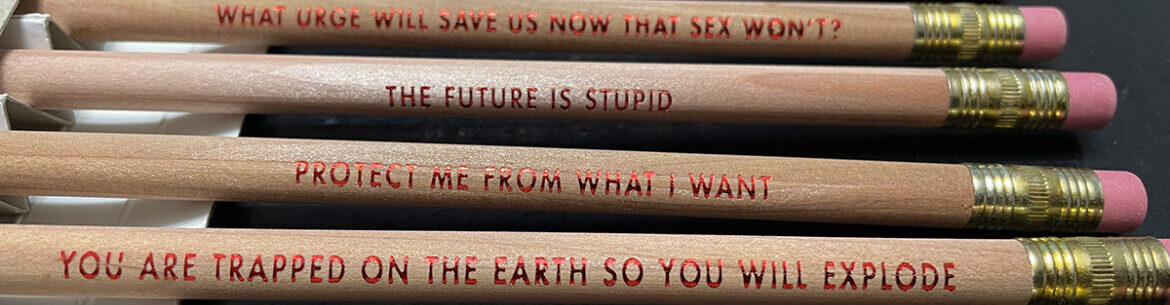
Ngai’s work is also prescient in the context of contemporary internet culture, where ambient envy, paranoia, and ironic detachment are widespread. In resisting heroic narratives and embracing minor affect, Ugly Feelings offers a compelling aesthetic and political framework—one that acknowledges how emotions, even the unpleasant ones, carry critical weight in both literature and life.
For instance, the affective economy of social media: doomscrolling, subtweeting, influencer envy, and the constant pressure to be “relatable” or “authentic” for public consumption. These platforms feed on exactly the kind of low-level, ambient feelings Ngai theorizes. Feelings like envy aren’t just private but also structurally cultivated. Anxiety is no longer an individual pathology, but a collective baseline. The irritations and micro-frustrations of everyday digital life, such as the buffering screen, the ghosted text, and the algorithm’s opaque logic mirror, reflect Ngai’s view of the subject trapped within vast, impersonal systems.
Ngai’s emphasis on the stuckness of these emotions (what she calls their “obstructed agency”) offers a lens for understanding the current malaise of political fatigue and affective overload. In many ways, her ugly feelings reflect the contemporary condition: saturated with information, yet powerless; expressive, yet unheard. Rather than dismiss these feelings as useless, Ngai urges us to see them as historically and politically symptomatic. They don’t point the way forward, but they reveal where we are. In that recognition lies their radical potential.
 Jeff Allred (he/him/his)
 Ian Goldman-Sanderson (He/Him)
 Carmen Diaz (she/her)
 Kate Meadows (she/her/hers)
