Daily Archives

2 Articles

Uncategorized

Glorification of the Traditional Intellectual Mind?

Posted by Jeff Allred (he/him/his) on

I know this is rather old material, but during our discussion about Gramsci, I managed to scrawl down a theory I came up with about the development of attitudes toward traditional intellectuals that I’d like to share (not sure anyone will read it at this point, though).

Just to rehash: In “The Formation of the Intellectuals”, Gramsci breaks down what it means to be an intellectual as well as the two categories of intellectuals and their roles in society. Gramsci theorizes that the two “types” of intellectuals are traditional intellectuals and organic intellectuals. Traditional intellectuals are the easiest to pinpoint, in that they tend to be the only people we consider “real” intellectuals on a superficial level (that is, before reading Gramsci). According to Gramsci, these traditional intellectuals are scientists, philosophers, educators, doctors, clergymen, judges, etc. Traditional intellectuals are those who work primarily with their minds and regard themselves as autonomous and above the dominant social group (the “ignorant masses”, I guess one could say). They’re also considered transhistorical, in that they persist in spite of social upheaval. The less obvious of the two types of intellectuals are what Gramsci calls the organic intellectuals. These intellectuals are bound to class and have a direct relationship to production, and are thus embedded in the work structure. As Gramsci states, “These organic intellectuals would come from within the working class and stay within the working class working towards a counter-hegemony by actively engaging and leading in social relations”. They can be the intellectuals who work with their hands, like manual labourers or mechanics, but can also include union leaders amongst others who could be mistaken for traditional intellectuals. Although some may mistake organic intellectuals as being lowly or subservient to traditional intellectuals, they are often counter-hegemonic and responsible for social change.

What I really want to talk about in this blog post is a tangent I went on during the class discussion on this text. When we were discussing traditional intellectuals, I had this thought about exactly why traditional intellectuals are seen as more intellectual than organic intellectuals or those intellectuals who are more directly physically involved in their work (but all intellectual activity requires some physical interaction, really). I scrawled the following on the subject:

“-Viewed higher– work more w/ mind (intellect) as opposed to the physical realm, which is associated with lowliness + servitude. What is traditionally seen as the intellectual realm transcends the physical, moving toward the spiritual. (Is this at all rooted in religion, and the denial of the body and glorification of the mental/spiritual? [think purity, denial of the physical body and “lusts of the flesh”]).

“Resistance/denial of physicality/physical desires (almost moving toward asceticism), elevation of the intellectual and therefore the intangible (thoughts). Is this why society and ideology instructs us to value those who primarily work with their minds (traditional intellectuals) over those who work with their hands?”

I’d like to map this out more clearly eventually, probably over the break, but I think I might be onto something…


Uncategorized

Read more about ..

Posted by Jeff Allred (he/him/his) on

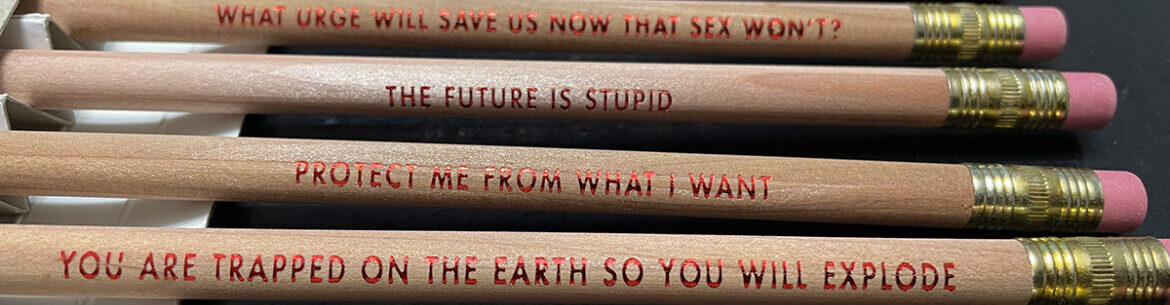
This image is important:

Image

As an intersectional feminist who is well aware of the sexual objectification of women in media, Mulvey didn’t have much to say that I haven’t surmised before; nevertheless, it’s always great to see academic work on the subject, and even better to be assigned such a reading, as I’m aware most people are deeply lacking in a feminist education. I truly think courses on feminism should be mandatory at the college level if not high school level. But I digress…

So, in her essay “Visual Pleasure and Narrative Cinema”, Laura Mulvey deconstructs the ways in which film thrives on the sexual objectification of women. Clearly drenched in psychoanalytical theory, Mulvey writes that the (cis-)women’s biological “lack” (the absence of a penis) instills fear in males– to be specific, castration anxiety. Men feel threatened by women’s lack of a penis, which symbolizes male power, and subsequently feel fit to degrade and subjugate women due to that perceived threat. It seems to me that by this theory, the root of patriarchy is this castration anxiety, although it’s hard to say who decided that presence as opposed to lack is indicative of power. Perhaps lack (the vagina) is analogous to death, and presence (the penis) is analogous to life. But men aren’t the ones giving birth anyway.

Mulvey asserts that this phenomenon is pervasive in cinema (particularly classic Hollywood films, which I lament as a TCM fan) as well, which isn’t at all surprising as the field is dominated by men. Mulvey came up with three looks in cinema that serve to objectify women in a sexual manner in other to facilitate male pleasure and position the male viewer as the “hero”. The first look is from the perspective of the dominant male in the film looking at the female character who he sexualizes and objectifies (he perceives her as a sexual object because men are always entitled to women’s bodies, naturally). The second look  is from the perspective of the audience, and the third look is a conglomerate of the first and second looks, in which the male audience makes the female character his personal sex object through his voyeurism and absurd self-identification with the male hero in the film.

Basically, none of this is unexpected to me. When I do go to the movies on rare occasion, I go anticipating being offended, although I try to take a step back and analyze what I’m viewing and still allow myself to enjoy the parts of it that aren’t so dehumanizing. Something else I’ve been mulling over is how cinema has changed for women since the classic Hollywood era. Although most women in films from the 20s-50s (and I guess the first half of the 60s counts too?) do match up to what is expected of a woman (that is, traditional femininity), there wasn’t nearly as much graphic sexual content (like why is that even necessary and how does that ever further a plot, please go away with your sad teenage fantasies thank you). Women were implicitly, but not explicitly, sexual objects of male desire. I think it can be argued that in that regard, maybe women had it better in classic Hollywood films, but then again it can also be argued that the sexual liberty of modern and contemporary films promote the idea that women are sexual beings, do like sex, and shouldn’t be ashamed of it.

Skip to toolbar