Yearly Archives

166 Articles

Uncategorized

Glorification of the Traditional Intellectual Mind?

Posted by Jeff Allred (he/him/his) on

I know this is rather old material, but during our discussion about Gramsci, I managed to scrawl down a theory I came up with about the development of attitudes toward traditional intellectuals that I’d like to share (not sure anyone will read it at this point, though).

Just to rehash: In “The Formation of the Intellectuals”, Gramsci breaks down what it means to be an intellectual as well as the two categories of intellectuals and their roles in society. Gramsci theorizes that the two “types” of intellectuals are traditional intellectuals and organic intellectuals. Traditional intellectuals are the easiest to pinpoint, in that they tend to be the only people we consider “real” intellectuals on a superficial level (that is, before reading Gramsci). According to Gramsci, these traditional intellectuals are scientists, philosophers, educators, doctors, clergymen, judges, etc. Traditional intellectuals are those who work primarily with their minds and regard themselves as autonomous and above the dominant social group (the “ignorant masses”, I guess one could say). They’re also considered transhistorical, in that they persist in spite of social upheaval. The less obvious of the two types of intellectuals are what Gramsci calls the organic intellectuals. These intellectuals are bound to class and have a direct relationship to production, and are thus embedded in the work structure. As Gramsci states, “These organic intellectuals would come from within the working class and stay within the working class working towards a counter-hegemony by actively engaging and leading in social relations”. They can be the intellectuals who work with their hands, like manual labourers or mechanics, but can also include union leaders amongst others who could be mistaken for traditional intellectuals. Although some may mistake organic intellectuals as being lowly or subservient to traditional intellectuals, they are often counter-hegemonic and responsible for social change.

What I really want to talk about in this blog post is a tangent I went on during the class discussion on this text. When we were discussing traditional intellectuals, I had this thought about exactly why traditional intellectuals are seen as more intellectual than organic intellectuals or those intellectuals who are more directly physically involved in their work (but all intellectual activity requires some physical interaction, really). I scrawled the following on the subject:

“-Viewed higher– work more w/ mind (intellect) as opposed to the physical realm, which is associated with lowliness + servitude. What is traditionally seen as the intellectual realm transcends the physical, moving toward the spiritual. (Is this at all rooted in religion, and the denial of the body and glorification of the mental/spiritual? [think purity, denial of the physical body and “lusts of the flesh”]).

“Resistance/denial of physicality/physical desires (almost moving toward asceticism), elevation of the intellectual and therefore the intangible (thoughts). Is this why society and ideology instructs us to value those who primarily work with their minds (traditional intellectuals) over those who work with their hands?”

I’d like to map this out more clearly eventually, probably over the break, but I think I might be onto something…

Uncategorized

Read more about ..

Posted by Jeff Allred (he/him/his) on

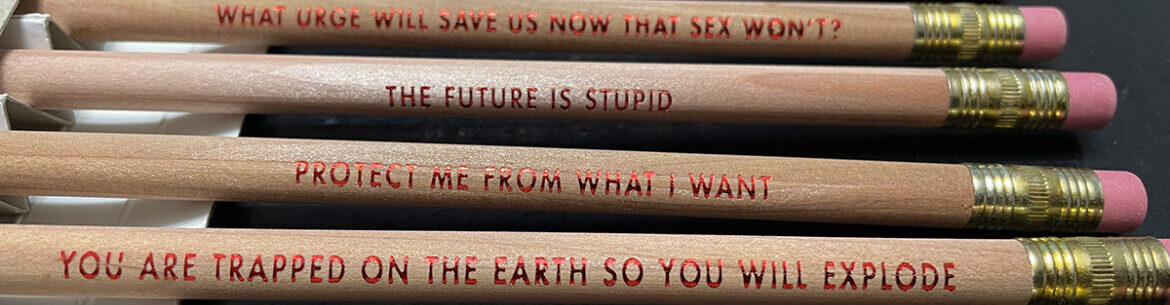
This image is important:

Image

As an intersectional feminist who is well aware of the sexual objectification of women in media, Mulvey didn’t have much to say that I haven’t surmised before; nevertheless, it’s always great to see academic work on the subject, and even better to be assigned such a reading, as I’m aware most people are deeply lacking in a feminist education. I truly think courses on feminism should be mandatory at the college level if not high school level. But I digress…

So, in her essay “Visual Pleasure and Narrative Cinema”, Laura Mulvey deconstructs the ways in which film thrives on the sexual objectification of women. Clearly drenched in psychoanalytical theory, Mulvey writes that the (cis-)women’s biological “lack” (the absence of a penis) instills fear in males– to be specific, castration anxiety. Men feel threatened by women’s lack of a penis, which symbolizes male power, and subsequently feel fit to degrade and subjugate women due to that perceived threat. It seems to me that by this theory, the root of patriarchy is this castration anxiety, although it’s hard to say who decided that presence as opposed to lack is indicative of power. Perhaps lack (the vagina) is analogous to death, and presence (the penis) is analogous to life. But men aren’t the ones giving birth anyway.

Mulvey asserts that this phenomenon is pervasive in cinema (particularly classic Hollywood films, which I lament as a TCM fan) as well, which isn’t at all surprising as the field is dominated by men. Mulvey came up with three looks in cinema that serve to objectify women in a sexual manner in other to facilitate male pleasure and position the male viewer as the “hero”. The first look is from the perspective of the dominant male in the film looking at the female character who he sexualizes and objectifies (he perceives her as a sexual object because men are always entitled to women’s bodies, naturally). The second look  is from the perspective of the audience, and the third look is a conglomerate of the first and second looks, in which the male audience makes the female character his personal sex object through his voyeurism and absurd self-identification with the male hero in the film.

Basically, none of this is unexpected to me. When I do go to the movies on rare occasion, I go anticipating being offended, although I try to take a step back and analyze what I’m viewing and still allow myself to enjoy the parts of it that aren’t so dehumanizing. Something else I’ve been mulling over is how cinema has changed for women since the classic Hollywood era. Although most women in films from the 20s-50s (and I guess the first half of the 60s counts too?) do match up to what is expected of a woman (that is, traditional femininity), there wasn’t nearly as much graphic sexual content (like why is that even necessary and how does that ever further a plot, please go away with your sad teenage fantasies thank you). Women were implicitly, but not explicitly, sexual objects of male desire. I think it can be argued that in that regard, maybe women had it better in classic Hollywood films, but then again it can also be argued that the sexual liberty of modern and contemporary films promote the idea that women are sexual beings, do like sex, and shouldn’t be ashamed of it.

Uncategorized

Blogs 1+2 all rolled up into one long blog post

Posted by Jeff Allred (he/him/his) on

Nietzche and the unearthing of contradiction

Language is a beautiful device. It has the potential for all sorts of expressiveness and is the only real tool that we are capable of using for discourse on any level. It can be poetic, it can be literary and it can even invoke tone without any sort of verbal addition. However there are few things language simply cannot do. One of those things is to allow the existence of contradicting ideas.

Nietzsche’s “On truth and lying in a non moral sense” establishes an understanding of language that says that our ability to define one thing or another is shaped by the understanding of what that thing is not metaphorically. In his eyes a word is an utterance which allows itself to be associated with any number of metaphysical ideas about what that object is, and everything that that object is not is false. In other words everything that it is not, is considered by Nietzsche to be a lie.

For example there are a number of adjectives (which represent a separate set of metaphors entirely) that we can apply to a noun like flower. The adjectives, bulbous, fragrant, and alive will work but other adjectives such as hard, and noisy, are not effective. Although it seems obvious, what Nietzsche is unearthing is that this idea of something being bestowed acceptable characteristics, defines truth and lying. To bestow upon an object or a person and attribute that it does not possess is opposite to the truth, and is therefore a lie.

Language therefore does not allow itself to express contradicting ideals as it often asserts that while there are many accepted truths, none of those truths can exist at odds with one another.

The reading is a basis for so much discourse that it like many other essays, allows itself to zoom in on the human plight and realize what it means for us to have contradictions within ourselves.

Saussure and the meaning of things

It’s weird to now be typing this blog post in an after the fact sort of retrospective sense instead of in the up to the hour fresh reaction that this reading probably deserves. Saussure’s work on signs, signifier and signified and his work on semiology (invention actually) shaped philosophical discourse.

Saussure’s analysis brings him to one very important question, how does language as a structure rob objects and things in the material world of their intrinsic value. Saussure argues that a word a “signifier” such as leaf can only bring up a certain number of signs in the mind of the recipient. Hearing the word leaf allows our mind to conjure an image of a leaf and not much more. Beyond that adjectives must be used to give characteristics to the leaf, even if they are intrinsic to what the leaf is. Therefore, the word “leaf” is nothing more than a representation of an idea, one that is on its own incomplete and that has very little ability to reflect what a leaf is in its entirety. It is merely a substitute.

It is for this very same reason that Saussure describes man as an architect, greater than the architects of nature. Language is a sctructure and a system that involves conforming to using a set of signifiers for the process of universal comprehension, of having some experience with the sign the signifiers point to and lastly of agreeing to visualize that sign as a signified when a signifier is used.

Perhaps the most inaccurate of signifiers are names given to people, first names in particular. First names are used to identify people in our lives, and they not only fail to capture the essence of who they signify, but the names themselves often have their own meanings. With names for people being significantly less varied, the use of one name (signifier) can call up a signified of various different people all possessing the same name.

Saussure work method is primarily analysis, he is not avid about offering a solution to bridging the gap between the signified and the signifier, and that’s perhaps because it isn’t possible. At least not now, but as human kind continues to move forward technologically we may get closer to bridging that gap.


Uncategorized

Blog Post #5 — Franz Fanon

Posted by Jeff Allred (he/him/his) on

Franz Fanon begins his essay “The Fact of Blackness” with the use of the words “dirty nigger” and the slightly more polite 1950s term “negro.” He resorts to using this shocking lead-in so as to force the reader to immediately open his eyes to the power of those words. The racial slur, now more commonly referred to as the n-word, is merely one little word and yet there is a great deal of connotation behind it. Fannon explains that “as long as a black man is among his own, he will have no occasion, except in minor internal conflicts, to experience his being through others” (1). However, once he enters the mainstream world — the world of the white man — the black man is forced to seem himself through their eyes. Rather than saying, “Look at that man,” the white speaker focuses only on one aspect of Fanon’s existence – his race. In addition, the addition of the adjective, “dirty,” makes Fannon seem like an object, as if he is nothing more than a muddy car or last week’s laundry. Moreover, the speaker’s description of Fanon as a “dirty nigger” brings to mind Saussure’ theory of arbitrariness. These words single Fanon out as a non-white entity that is unclean and therefore somehow corrupted. His presence contrasts with the other objects (people) in the scene, which are clean (innocent) and white (pure).

Furthermore, Fanon’s choice to quote unnamed speakers throughout his piece has two effects. First, the dialogue of these speakers highlights the objectification that the black man is forced to endure. Fanon desperately wants “to be a man among other men… and help to build [a world] together” (3). However, he tells us, “the occasion arose when I had to meet the white man’s eyes. An unfamiliar weight burdened me. The real world challenged my claims” (2). In fact, one of the speakers whose words Fanon shares, endeavors to prove that he is no racist by absurdly explaining his thoughts on “the negro” thereby actively pointing out Fanon’s blackness or otherness. Second, by not attaching names to the dialogue, the author lends power to his theme that these white people are also other. Though they are part of the mainstream, they are other to him. They have made themselves so by rejecting his notion that he could ever be “a man among men”.
Fanon further asserts that his encounters with the white world force him to exist as a triple person, “responsible at the same time for [his] body, for [his] race, for [his] ancestors” (3). In terms of his body, the black man operates like any other man, using a corporeal schema, which is the way our bodies react with the world. For example, after I get my milkshake at the counter from a cashier, I then have to walk to the beverage area to get a straw so that I can drink it. There is a relationship between my body and the physical world that is obvious. Next, when Fanon speaks of his race, he is referring to the historico-racial schema, which involves the interrelationship between the black man and the white community. The white child expresses fear towards Fanon because of the “thousand details, anecdotes, [and] stories,” (2) that have been constructed by the white community in an effort to define the nature of the “negro.” Though this child has no personal knowledge of Fanon, he believes that he knows something about him because of preconceived notions about black men that have been instilled in him prior to this chance encounter. Finally, Fanon explains that the racial epidermal schema makes him beholden to the behavior of his African ancestors, men and women who engaged in cannibalism, endured slavery and expressed their spiritual beliefs through music, dance and foreign rituals. Therefore, though Fanon himself is separated by hundreds of years from his ancestry, there is still an “evanescent” and hostile racism that is attached to him.
Fanon sees the last two parts of his triple identity as being thrust upon him. He finds that even amongst white liberals, who embrace the black man as a human being, do so with very set conditions. The white man can accept that the black man “has his heart on the left side” (7) like every other man. However, “under no conditions did he wish any intimacy between the races” out of a fear that the “physical and mental” prowess of the white race would somehow be diminished or diluted by an integration of black blood. Moreover, the white liberal treats racism or “color prejudice” (6), not as a destructive force that should be combatted, but as an outdated ideology that will hopefully go out of fashion in time. Thus, there is no real understanding or urgency amongst these liberal thinkers towards the plight of the black man.
Through the remainder of his essay, Fanon tells the reader about his journey of self-discovery as a black man; how he explored the history and culture of the African peoples; how he developed a sense of cultural pride; how he learned to define his own blackness. He refers to this journey as reclaiming his “negritude” (15) and uses examples and arguments that invoke the works of other theorists including: Marx, Hegel. Sartre, and Eliot. By the end of his piece, Fanon makes clear that his journey is ongoing. Every day he must endure the psychological onslaught in which the black man is defined through the lens of a white world. And every day, he resolves to emotionally counter that one-dimensional definition with his own understanding of his blackness.

Uncategorized

Great Semester and Semiotics/Linguistics in Contemporary Fantasy

Posted by Jeff Allred (he/him/his) on

Professor Allred, thank you for a great semester, and a course that proved to be so much more exciting than I ever thought a class could be. 

I also want to point everyone’s attention to one of the best book I have ever read and one that in it’s title and lore contains semiotic allusions. 

The book is called: The Name of the Wind by Patrick Rothfuss.

Here is description of the plot:


My name is Kvothe, pronounced nearly the same as “quothe.” Names are important as they tell you a great deal about a person. I’ve had more names than anyone has a right to. The Adem call me Maedre. Which, depending on how it’s spoken, can mean The Flame, The Thunder, or The Broken Tree. 

“The Flame” is obvious if you’ve ever seen me. I have red hair, bright. If I had been born a couple of hundred years ago I would probably have been burned as a demon. I keep it short but it’s unruly. When left to its own devices, it sticks up and makes me look as if I have been set afire. 

“The Thunder” I attribute to a strong baritone and a great deal of stage training at an early age. 

I’ve never thought of “The Broken Tree” as very significant. Although in retrospect, I suppose it could be considered at least partially prophetic. 

My first mentor called me E’lir because I was clever and I knew it. My first real lover called me Dulator because she liked the sound of it. I have been called Shadicar, Lightfinger, and Six-String. I have been called Kvothe the Bloodless, Kvothe the Arcane, and Kvothe Kingkiller. I have earned those names. Bought and paid for them. 

But I was brought up as Kvothe. My father once told me it meant “to know.” 

I have, of course, been called many other things. Most of them uncouth, although very few were unearned. 

I have stolen princesses back from sleeping barrow kings. I burned down the town of Trebon. I have spent the night with Felurian and left with both my sanity and my life. I was expelled from the University at a younger age than most people are allowed in. I tread paths by moonlight that others fear to speak of during day. I have talked to Gods, loved women, and written songs that make the minstrels weep. 

You may have heard of me. 

So begins the tale of Kvothe—from his childhood in a troupe of traveling players, to years spent as a near-feral orphan in a crime-riddled city, to his daringly brazen yet successful bid to enter a difficult and dangerous school of magic. In these pages you will come to know Kvothe as a notorious magician, an accomplished thief, a masterful musician, and an infamous assassin. But The Name of the Wind is so much more—for the story it tells reveals the truth behind Kvothe’s legend.


Within the lore of the book there exists a type of magic that is the most sought after, the power of knowing the true Names of Things. If you know the true names of things, not just the signifier, but the actual word that encompasses the entirety of the existence of something you have full power over it.

For example if you know the true name of the wind (which may change slightly depending on where you are) you have full power over it and can call on it and blow entire cities away, etc..

It’s a great book and Patrick Rothfuss has a BA degree in English and I am sure he came up with idea after having read some Saussure. 

Again. Thank You for a great class and I wish everyone the best in the future!!

Uncategorized

Best 3 Blogs

Posted by Jeff Allred (he/him/his) on

Blog Post 1: Eliot

In “Tradition and the Individual Talent”, Eliot explains his view on the role of poetry and how it really has nothing to do with the poet’s thoughts and feelings. I, for one, have always seen poetry as a way to symbolically portray what one is feeling. According to Eliot, the function of the poet is not to express his own feelings and emotions in his poems, but to make pieces of literature that reflects what came before it and can be integrated in the history of literature. He feels poetry should be impersonal to the poet, and for it to mean nothing emotionally to them. I have always seen poetry as an outlet to portray one’s emotions, in almost a secretive way.

Eliot begins to speak of the word “tradition”. He explains that this word is not a positive term in the history of criticism. Critics would use it as an adjective describing works and it was awful if your work was described as “too traditional”. He found it ironic, as the majority of literary works did not contain tradition and because of this he wanted to create one. He explains that critics look for things in writing that differentiates them from other writers; some kind of uniqueness and individuality. Eliot thinks that the best part of a writer’s work is the section that pays tribute to those who came before him, by praising their literary works. These tributes allow poets to be immortal. Eliot believes that the sections that poets assert their immortality robustly are where their individuality can be distinguished.

Eliot does not support “repetition just for repetition” and recognizes that originality is better than something that has been done before. This concept is very relatable , because stories and literary works that are original and unique are far more intriguing to me than something that I have heard before. He feels innovation is better than repetition and those who keep rewriting stories from the past will get lost in translation. He believes that in order for a poet to be unique he must combine tradition and modernity, in which both influence each other. I agree with this kind of logic because historical sense in a literary work is important but is the most interesting when combined with personal experiences or compared to things of the present. Almost like allowing the past and present to live together in existence instead of two separate entities


Blog Post: Saussure

Language is used to express thought. In actuality language consists of sounds (words) that portray a thought. Without language explanations would be very broad and vague. Saussure explains how language works. You have a concept thats connected to sounds which are called the signifiers and the signified. Saussure believes that language has value in and of itself and is not random sounds that create an image or idea. I believe that there is unlimited amounts of ways to express an idea. Language is not limited. Saussure says that the system of language is created by differences in sounds and differences in ideas. This concept was a little difficult to grasp but I have concluded that language and what it consists of does not have one concrete meaning.

I found it very interesting to learn about the Syntagmatic Relations. The placement of words in a sentence can determine the meaning of the thought. A sentence is never concrete. If you rearrange the words and emphasis on words in the same sentence, you could end up with a different meaning entirely. This ties back to my belief that language is never concrete and there is an unlimited amount of words to create ideas. Saussure also explains Associative Relations and how words with similar sounds are linked together. This is completely different from linguistic structure and falls under a symbolic expression. I was always under the impression that language and linguistics were pretty concrete but after reading this article it seems as if language is a very vague concept. So many theories are linked to but its functions are quite specific.
I like that Saussure refers to language as a chess game. According to him language is separated into two parts, langue and parole. Langue is the utterances and words. It is the part of language that has rules and is limited in numbers. Parole is compared to the moves in chess. There are an infinite amount of moves in chess and it is a concept that it more free and infinite. Language speaks you, you don’t speak language. Langue is learned and absent while parole is something that cannot be seen but could be heard and we could learn from it. This was a difficult topic to grasp, so the analogy was perfect. Grammar is an example of language but ways to express concepts is an example of parole. Saussure is known for this theory, and it is a valid one at that.


Blog 4 Gramsci Prison Notes

In Antonio Gramsci’s “The Formation of the Intellectuals” he describes what an intellectual is and what it means to be one. He describes the different types of intellectuals there are and each of their functions in society. He begins to speak about the traditional intellectuals, which was the easiest to understand from the reading. We associate lawyers, scientists, philosophers, doctors, and scholars as traditional intellectuals. Gramsci feels that these types of intellectuals are independent of the dominant social group and self-governing because they feel that they’re group is essential to social and political change. These are the type of careers that even people now are trying to get into because they hold such a prestigious reputation amongst society. You must obtain special qualifications as well as talents to have such a title, and that in and of itself is reputable.

Gramsci mentions the organic intellectual, and it is quite different than the traditional. He explains that this intellectual has created and organized production instead of participating in it. He explains that they are organizers in different areas of society who are tied to economic production. These include entrepreneurs who create their own businesses rather than be a part of one. After reading this I could definitely acknowledge the difference and why they have different purposes in society.

Aside from describing these intellectuals, he also mentions that even men who have physical based jobs also utilize their intellect. He feels that no matter how mechanical a job is, any type of work requires some kind of creative intellect. He feels every individual uses their intellect in different ways but that does not mean they are not an intellectual. Society makes us believe that intellectuals are philosophers and scientists and all those cliché “smart” careers, but in reality everyone is an intellectual in their own right.

Gramsci believes that the degree of intellectual activity varies within every individual and that however this intellect is distributed will determine their place in society. Their function in society will also be discovered from their intellectual activity. This plays a role in how culture is formed and how society is organized. I wouldn’t have thought of it that way, especially now in the modern times. I feel as if I’m living life for me and choosing my career for some kind of fulfillment in my life but little did I know that no matter what I choose, I will be serving a purpose in society.


Uncategorized

Blog 4- Gramsci prison notes

Posted by Jeff Allred (he/him/his) on

In Antonio Gramsci’s “The Formation of the Intellectuals” he describes what an intellectual is and what it means to be one. He describes the different types of intellectuals there are and each of their functions in society. He begins to speak about the traditional intellectuals, which was the easiest to understand from the reading. We associate lawyers, scientists, philosophers, doctors, and scholars as traditional intellectuals. Gramsci feels that these types of intellectuals are independent of the dominant social group and self-governing because they feel that they’re group is essential to social and political change. These are the type of careers that even people now are trying to get into because they hold such a prestigious reputation amongst society. You must obtain special qualifications as well as talents to have such a title, and that in and of itself is reputable.

Gramsci mentions the organic intellectual, and it is quite different than the traditional. He explains that this intellectual has created and organized production instead of participating in it. He explains that they are organizers in different areas of society who are tied to economic production. These include entrepreneurs who create their own businesses rather than be a part of one. After reading this I could definitely acknowledge the difference and why they have different purposes in society.

Aside from describing these intellectuals, he also mentions that even men who have physical based jobs also utilize their intellect. He feels that no matter how mechanical a job is, any type of work requires some kind of creative intellect. He feels every individual uses their intellect in different ways but that does not mean they are not an intellectual. Society makes us believe that intellectuals are philosophers and scientists and all those cliché “smart” careers, but in reality everyone is an intellectual in their own right.

Gramsci believes that the degree of intellectual activity varies within every individual and that however this intellect is distributed will determine their place in society. Their function in society will also be discovered from their intellectual activity. This plays a role in how culture is formed and how society is organized. I wouldn’t have thought of it that way, especially now in the modern times. I feel as if I’m living life for me and choosing my career for some kind of fulfillment in my life but little did I know that no matter what I choose, I will be serving a purpose in society.

Uncategorized

Blog post 1: Eliot

Posted by Jeff Allred (he/him/his) on

In “Tradition and the Individual Talent”, Eliot explains his view on the role of poetry and how it really has nothing to do with the poet’s thoughts and feelings. I, for one, have always seen poetry as a way to symbolically portray what one is feeling. According to Eliot, the function of the poet is not to express his own feelings and emotions in his poems, but to make pieces of literature that reflects what came before it and can be integrated in the history of literature. He feels poetry should be impersonal to the poet, and for it to mean nothing emotionally to them. I have always seen poetry as an outlet to portray one’s emotions, in almost a secretive way.

Eliot begins to speak of the word “tradition”. He explains that this word is not a positive term in the history of criticism. Critics would use it as an adjective describing works and it was awful if your work was described as “too traditional”. He found it ironic, as the majority of literary works did not contain tradition and because of this he wanted to create one. He explains that critics look for things in writing that differentiates them from other writers; some kind of uniqueness and individuality. Eliot thinks that the best part of a writer’s work is the section that pays tribute to those who came before him, by praising their literary works. These tributes allow poets to be immortal. Eliot believes that the sections that poets assert their immortality robustly are where their individuality can be distinguished.

Eliot does not support “repetition just for repetition” and recognizes that originality is better than something that has been done before. This concept is very relatable , because stories and literary works that are original and unique are far more intriguing to me than something that I have heard before. He feels innovation is better than repetition and those who keep rewriting stories from the past will get lost in translation. He believes that in order for a poet to be unique he must combine tradition and modernity, in which both influence each other. I agree with this kind of logic because historical sense in a literary work is important but is the most interesting when combined with personal experiences or compared to things of the present. Almost like allowing the past and present to live together in existence instead of two separate entities.

Uncategorized

Mirror Stage

Posted by Jeff Allred (he/him/his) on

Over the summer, I nannied a two month old child, and one of the first things I can remember doing when I held him for the first time was walking in front of the mirror and trying to get him to recognize himself. After reading Lacan’s “The Mirror Stage”, I know why he failed to recognize himself. It’s interesting to me that infants who still are unable to recognize themselves in the mirror are nevertheless fascinated by the image they see; they can’t possibly conceive of it only being a reflection, when they realize it is them between fifteen and eighteen months.


Lacan argues that once a child recognizes their own reflection, it transforms their understanding of themselves from a being that is locked within the view of the first person to an object that can be seen outside of itself. The realization that the child is an object that can be witnessed aids in the formation of the child’s knowledge of self. To further complicate this, although the child is able to recognize a cohesive corporeal being that is themself, this physicality is in conflict with the level of motor skills the child possesses when they are able to recognize themself. Because the child has such little control over their body but can recognize their physical being as whole, Lacan suggests that the irreconcilable differences between the Ego (which is formed by the child’s identification of their own image) and the body cause the child existential turmoil until their motor skills match the whole being they see in the mirror. The child sees their reflection as a rival, because they cannot reconcile the wholeness of the image with their fragmented sense of self.

Now, to bring this topic to more recent times as far as what we’ve been doing in class (since this post is embarrassingly late), I’d like to investigate Kaja Silverman’s take on “The Mirror Image” and the implications of the child’s recognition of self. In The Threshold of the Visible World, Silverman states that the Ego is derived from the body as well as from outside the body. Lacan states that the happiness the child gets from the illusion of wholeness is from the mirror stage, whereas Kaja Silverman argues that the experience is not because of the bodily wholeness of the child’s image but because of the integration of the visual self-image with the internal sense of self. Furthermore, Silverman disagrees with Lacan in that she theorizes that the child seeks wholeness not because it sees itself as fragmented, but because culture avows the importance of wholeness and unity, which gives the child a fragmented sense of self.

Skip to toolbar
